
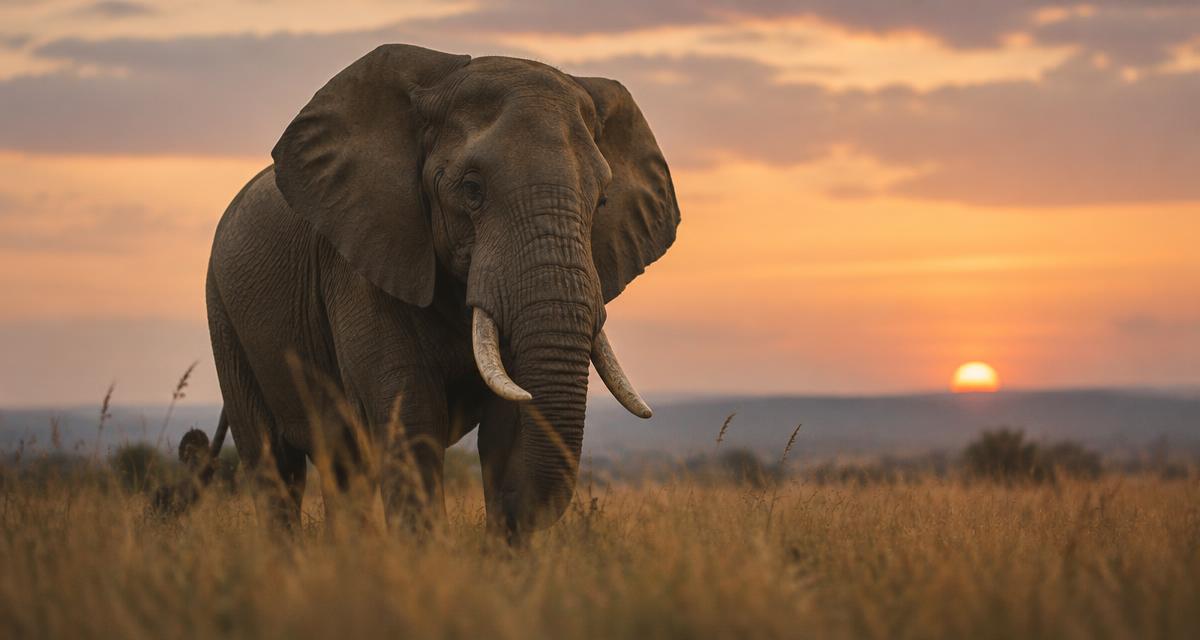
Can animals have psychological disorders is a question animal psychology has answered with growing confidence. Animal behavior research shows fear, anxiety, grief, and trauma like states in animals that respond to the same principles human disorders respond to. Animal emotions are not a sentimental idea, they are a research finding. What animal minds reveal about human minds is the reason this question matters for you and not only for them.
What Does Animal Psychology Actually Study?
Animal psychology, more formally known as comparative psychology, is the study of behavior and mental processes across species, with the comparison doing the heavy lifting in the name. The field asks what animals perceive, learn, remember, feel, and fear, and it asks by watching behavior rather than by asking, since asking is not on the table. The core assumption is continuity: the mind did not appear fully formed in humans, so the capacities humans have, attention, fear, attachment, even something like mood, should have precursors in the species we came from.
This assumption has been contested for centuries, mostly through the worry that saying animals have feelings is sentimental projection. The modern response is methodological rather than philosophical. Researchers do not claim to know what it is like to be a bat. They measure what animals do: how long a dog persists in searching for an absent owner, how a rat chooses between a risky reward and a safe one, how an elephant responds to the bones of a dead relative. Behavior under controlled conditions is the evidence, and it has accumulated into something substantial.
What has emerged is a field with real consequences for how people understand their own minds. Emotional states that humans experience as uniquely personal, dread, attachment, grief, panic, turn out to have observable, measurable counterparts in other species, produced by overlapping biology. That overlap is the reason this question matters beyond the animals. Every finding about an anxious dog or a grieving elephant is also a finding about the ancient machinery humans inherited and still run on.
How Do Scientists Test a Mind That Cannot Talk?
The founding trick of the whole field was learning to make behavior legible. Ivan Pavlov's work with dogs, published in English in 1927 as Conditioned Reflexes, showed that physiological responses could be measured, predicted, and reshaped by experience. Pavlov was not primarily interested in dogs. He was interested in the reflex machinery that dogs shared with every mammal, including the human kind sitting in his lectures. The dogs were simply the cleanest available instrument for studying learning itself.
Modern methods descend directly from that logic. A researcher who wants to know whether a rat prefers one outcome to another builds a choice situation and counts selections. A researcher who wants to know whether a dog remembers an event designs a delay and measures looking. Preference tests, delayed response tasks, and conditioning paradigms turn private states into public data. The method has limits, which serious researchers state plainly: behavior is evidence about mental states, not a transparent window onto them.
What makes the inferences defensible is convergence. When fear learning in rats, avoidance in dogs, and threat responses in humans all follow the same mathematical curves, respond to the same drugs, and involve the same brain regions, the claim that the underlying machinery is shared stops being a guess. No single study proves that an animal feels anything. Hundreds of studies pointing the same direction make the shared machinery the reasonable default rather than the exotic claim.
Can Animals Really Experience Anxiety?
The evidence for anxiety like states in animals is among the strongest in the field, and it comes in layers. The first layer is behavioral: dogs show separation distress, hypervigilance, avoidance, and compulsive behaviors that parallel human anxiety presentations closely enough that veterinary behavioral medicine treats them as clinical problems. There are diagnostic frameworks for canine anxiety, standardized treatment protocols, and medications that veterinarians prescribe based on the same principles used in human psychiatry.
The second layer is experimental. A line of research running from Pavlov's day to the present shows that unpredictability itself is a stressor. When an animal cannot predict whether a tone will be followed by a shock, stress hormones rise higher than when the shock is certain, because certainty at least allows preparation. This finding, that the loss of control and predictability is itself the engine of anxiety, transferred directly into human research and shaped modern understanding of generalized anxiety, where the threat is often not a thing but a possibility.
The third layer is shared biology. The amygdala, the hypothalamic-pituitary-adrenal stress axis, and the neurochemistry of fear are conserved across mammals with only minor variation. When a dog trembles at the sound that precedes its owner leaving, the systems firing are recognizably the systems that fire when a human dreads a meeting. The dog cannot tell you about next Tuesday. The dread, in the biological sense, is the same kind of event happening in the same kind of machinery.
Do Animals Show Something Like Trauma?
Trauma like states in animals have moved from fringe observation to mainstream research concern, and the shift began with cases that were hard to explain any other way. G. A. Bradshaw, working on elephant behavior, documented populations of wild elephants whose social structures had been shattered by culling and habitat loss, and who displayed persistent, disabling behavior: hyperaggression, abnormal startle responses, social withdrawal, and behaviors that looked functionally like the flashbacks and avoidance of human post traumatic stress. Her 2009 book Elephants on the Edge gathered this evidence and argued that what these elephants carried was not a metaphor but a parallel.
Outside the wild, captivity produces its own signatures. Animals in inadequate captive conditions develop stereotypies, repetitive purposeless movements like pacing in tight circles or swaying, that researchers treat as behavioral indicators of chronic distress and deprivation. The movements persist after conditions improve, which is one of the features that makes them comparable to the persistence of human trauma responses. A body that has spent years preparing for a threat does not immediately believe the threat is gone.
The connection to human psychology is direct rather than decorative. Much of what clinicians know about how fear becomes chronic was learned from animal models, including the classic work on learned helplessness, where animals exposed to inescapable stress later failed to act even when escape became possible. That finding, unsettling on several levels, reshaped human understanding of depression and of why people remain in harmful situations after the exits open. The animal research was never a detour. It was the main road, with humans walking it unknowingly the whole time.
Do Animals Grieve?
Grief is where the field gets most contested and most interesting. Elephants have been observed returning to the bones of dead relatives, handling them, and standing quietly with them, behavior that Marc Bekoff and other researchers interpret as mourning. Dolphin mothers have been seen carrying dead calves for days. Dog behavior after the loss of a companion, human or animal, includes searching, appetite loss, disrupted sleep, and clinging to the owner, patterns familiar enough that veterinary behaviorists discuss canine grief as a clinical topic rather than a sentimental one.
The scientific caution is appropriate and worth stating: observing behavior that resembles mourning is not identical to proving an animal experiences loss the way a human narrates it. Skeptics note that an animal might be responding to the disruption of a routine, the absence of a bonded partner, rather than to death as a concept. The response to that caution is that these are not mutually exclusive readings. Grieving in humans is also partly the pain of an absent presence, a bond that has lost its object. The similarity is not a projection. It is the point.
What tips the balance for many researchers is the attachment literature. Animal social bonds show the same architecture as human ones: preference, distress at separation, comfort seeking at reunion. Wherever that architecture exists, separation appears to hurt. An animal that has spent years in daily contact with a companion has a nervous system organized around that companion's presence, and its absence is a biological event with a biological cost. Humans invented funerals to manage exactly this. Animals manage it with persistence, vigilance, and time.
What Does Animal Research Tell Us About Human Anxiety?
The translation runs in one direction more than people realize. Modern treatments for human anxiety stand on decades of animal research. Exposure therapy, the best supported behavioral treatment for phobias and panic, works on principles first mapped in animal conditioning studies: fear learned through experience can be weakened through new experience, and the weakening follows predictable rules that were worked out in rodents long before they were applied in clinics. The therapy works in humans because the learning machinery it targets is mammalian, not human.
The same is true of the neuroscience. The fear circuitry that anxiety disorders distort was charted largely through animal work, and the pharmacology of anxiety rests on animal models almost entirely, since no human volunteers for the early testing. When a person takes a medication that dampens their panic, the safety and logic of that intervention was established in animals whose nervous systems are close cousins of their own. The debt is real, and largely unacknowledged, because the research animals are invisible in the final product.
For the person reading this, the practical implication is about self judgment. Anxiety is frequently experienced as a personal failing, a weakness of character, or an embarrassing overreaction. The comparative evidence says otherwise. The capacity for anxiety is ancient, shared, and functional, a survival system doing what survival systems do in an environment it did not evolve for. You are not weak for having anxiety. You are running very old software in a very new world, and the software's alerts are calibrated for a wilderness you no longer live in.
Where Does the Comparison Between Animal and Human Minds Break Down?
Intellectual honesty requires marking where the continuity stops, because the differences are as informative as the similarities. Language is the obvious one. Humans can think about their own fear, name it, tell stories about it, and dread their own dread. This recursive layer changes the texture of everything. A dog's fear is about the thunder. A human's fear is about the fear, about what it means, about what it says about them, and about the relationship it might cost. The second order thinking is where suffering multiplies.
The second difference is the narrative self. Humans live inside an ongoing story about who they are, and psychological pain in humans is often pain about the story: the failed marriage as evidence of unlovability, the job loss as the collapse of an identity. Animals experience states without narrating them into a life story. Whatever grief a dog feels, it does not also feel that grief confirms something about what kind of dog it is. The human layer of meaning is both the source of the richest experiences available to any species and the amplifier of the worst ones.
The third difference is cultural accumulation. Humans inherit not just genes but stories, institutions, and coping technologies, from therapy to religion to the concept of mental health itself. An anxious animal has its temperament and its environment. An anxious human has those plus several millennia of ideas about what anxiety means, most of which, historically, were unhelpful. The comparison between species should make humans humbler about the shared machinery and more appreciative of the one thing humans can do with it that animals cannot, which is understand it and deliberately change their relationship to it.
Why Do Humans Care So Much About Whether Animals Have Feelings?
The intensity of this question, both in research and in public feeling, is itself worth examining, because it runs on more than curiosity. One driver is the mirror. People look to animals to answer questions about themselves that feel too exposed to ask directly. Whether animals love, fear, and grieve is also a question about whether those states are biology or performance, and the answer determines how much of the human inner life is contingent and how much is shared inheritance.
A second driver is moral. How humans treat animals depends almost entirely on whether animals are understood to feel. The history of animal welfare law is the history of the feeling question being answered, incrementally and reluctantly, in one direction. This is why the science is never purely academic. Every finding about animal sentience flows into veterinary practice, farming policy, and the ethics of the laboratory. The stakes are not hypothetical, which is part of why resistance to the findings has been so durable.
The third driver is the most personal. Watching an animal suffer visibly, with no ability to explain itself, trains a kind of attention that transfers to humans. Anyone who has recognized anxiety in a dog before recognizing it in themselves knows the experience. Animals are often easier to read than people, and easier to be honest about. People will say a dog is distressed who would never say the same of their partner, or their colleague, or themselves. The animal becomes a practice ground for a compassion the rest of life has not taught yet.
What Do Domestic Animals Teach Us About Attachment?
Dogs are the most studied animals in psychology outside of rats, and the reason is attachment. Dogs form bonds to humans with the same signature architecture that infants form to caregivers: using the human as a secure base from which to explore, showing distress at separation, seeking contact for comfort rather than only for food. The parallel is close enough that attachment researchers use dogs as a natural model, and the comparison illuminates both directions of the bond.
There is a subtler lesson in the way the attachment works. A dog's bond does not depend on the human being impressive, successful, or consistent in any performance sense. It depends on presence, predictability, and repair after ruptures. Dogs do not require their people to be without fault, only to be recoverable. Humans, who so often attach conditionally, to their own achievement or their partner's mood, keep discovering that the animal in the house was running a simpler and more durable algorithm all along.
This is also where the article's question becomes actionable. If animal attachment research says that security comes from predictability and repair, and if anxiety is the state of living with too little of either, then the anxious human and the anxious dog have the same starting prescription: stable routines, reliable signals, and experiences that end safely. None of this replaces clinical care where it is needed, but it reframes what is being treated. Not a defective character, but a nervous system asking for conditions it can trust.
What Do Animal Minds Reveal About Your Own?
The reveal is not that animals are secretly humans with fur, and it is not that humans are secretly animals pretending otherwise. The reveal is that a large portion of what humans experience as their inner life runs on machinery older than the species, and that this machinery, fear, attachment, grief, plays by rules that were mapped first in animals because the signals were cleaner there. Every difficult state a person struggles with has a wilder ancestor, and the ancestor is not a metaphor. It is lineage.
That lineage cuts both ways, and both cuts are useful. It normalizes: anxiety, separation distress, and grief are not personal defects but standard equipment, shared with every dog that trembles at a door and every elephant that will not leave the bones. And it clarifies: the specifically human contribution to suffering, the stories, the shame, the second order dread, is the part that can be worked with directly, because it is made of language and meaning, and those respond to understanding in a way raw fear does not.
If reading about animal anxiety made your own feel suddenly more legitimate, that recognition is worth following rather than filing away. The free scenario based anxiety test on this site takes about six minutes and looks at the behavioral patterns, the overpreparing, the vigilance, the rest that does not restore, that the shared mammalian machinery produces in its human hosts. Seeing your own pattern named, the way this article named the patterns in animals, is usually the moment the struggle with it changes shape.